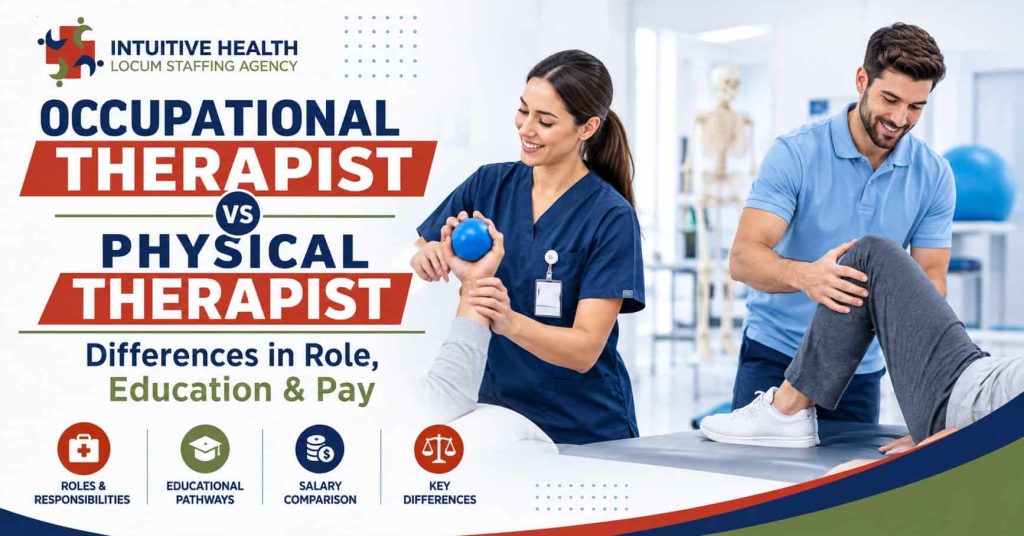
Choosing between an occupational therapist and a physical therapist can be difficult. Both professionals help patients recover from injuries, manage health conditions, and improve their independence. However, they approach rehabilitation from different angles.
An occupational therapist (OT) helps people complete everyday activities, such as dressing, cooking, and returning to work. A physical therapist (PT) focuses on improving movement, strength, balance, and mobility. Understanding these differences can help you choose the right career path.
This guide compares occupational therapist vs. physical therapist careers, including job responsibilities, education, licensing requirements, salary, and employment opportunities.
What Does an Occupational Therapist Do?
An occupational therapist helps people develop, regain, or maintain the skills they need for daily activities. The goal is to help patients participate in their personal, professional, and social lives as independently as possible.
OTs work with people of different ages. Their patients may include children with developmental conditions, adults recovering from injuries, and older people experiencing changes in physical or cognitive abilities.
According to the American Occupational Therapy Association’s explanation of occupational therapy, the profession uses meaningful everyday activities to support health, well-being, and participation.
Common Responsibilities of an OT
Occupational therapists assess each patient’s abilities and identify activities that require additional support. They then develop treatment plans based on individual needs and recovery goals.
Their responsibilities may include:
- Evaluating patients’ physical, cognitive, and sensory abilities.
- Helping patients improve fine motor skills and hand coordination.
- Teaching techniques for dressing, bathing, eating, and grooming.
- Recommending adaptive equipment for everyday activities.
- Helping patients develop skills for school and workplace tasks.
- Suggesting changes to home or work environments.
- Monitoring patient progress and updating treatment plans.-
For example, an OT may work with someone recovering from a stroke who has difficulty getting dressed or preparing meals. The therapist can introduce adaptive techniques and practice activities that help the patient manage these tasks more independently.
What Does a Physical Therapist Do?
A physical therapist helps patients improve movement and physical function. They work with people experiencing injuries, chronic conditions, mobility limitations, or physical impairments after surgery.
PTs focus on helping patients move safely and regain strength. They also work to reduce pain, improve flexibility, and restore physical abilities.
Common Responsibilities of a PT
Physical therapists assess how patients move and identify physical limitations that affect their mobility. They use targeted exercises and other treatment techniques to address these limitations.
Their responsibilities may include:
- Evaluating posture, balance, strength, and range of motion.
- Developing individualized rehabilitation programs.
- Teaching therapeutic exercises and stretching techniques.
- Helping patients improve walking and coordination.
- Using appropriate hands-on treatment techniques.
- Monitoring recovery and adjusting exercise plans.
- Teaching patients how to maintain progress outside therapy sessions.
For example, a PT may treat someone recovering from knee replacement surgery. The therapist can introduce exercises that gradually improve leg strength, joint movement, and walking ability.
Occupational Therapy vs Physical Therapy: Key Differences
The main difference between occupational therapy and physical therapy is the outcome each profession targets.
OTs focus on helping patients perform meaningful daily activities. PTs concentrate on improving the physical abilities that support movement and mobility.
However, both professions share some responsibilities. They assess patients, create treatment plans, monitor progress, and work with other healthcare professionals.
| Comparison | Occupational Therapist | Physical Therapist |
| Main focus | Daily activities and independence | Movement and physical function |
| Treatment goals | Improve everyday living skills | Improve strength, mobility, and balance |
| Common techniques | Activity-based training and adaptive strategies | Therapeutic exercises and movement training |
| Patient needs | Cognitive, physical, sensory, and functional limitations | Pain, injuries, weakness, and mobility limitations |
| Common settings | Hospitals, schools, clinics, and home health | Hospitals, clinics, rehabilitation centers, and home health |
| Entry-level education | Master’s or doctoral degree | Doctor of Physical Therapy (DPT) |
| Licensing | NBCOT certification and state requirements | NPTE and state licensing |
Differences in Patient Treatment
The treatment approach depends on the patient’s condition and personal goals.
Consider someone recovering from a serious injury that affects their arm. A physical therapist may focus on restoring shoulder movement, improving strength, and increasing the arm’s range of motion.
An occupational therapist may work on using that arm during everyday activities. These may include brushing teeth, preparing meals, writing, or getting dressed.
Both professionals contribute to recovery, but they address different aspects of the patient’s needs.
Where Do Occupational and Physical Therapists Work?
Both professions offer opportunities across different healthcare environments. However, their responsibilities may change depending on the setting and patient population.
Occupational therapists commonly work in:
- Hospitals: Helping patients regain functional abilities after surgery, illness, or injury.
- Schools: Supporting children with motor, sensory, and developmental needs.
- Outpatient clinics: Providing rehabilitation for people with physical or cognitive limitations.
- Home health services: Helping patients manage daily activities in their homes.
- Skilled nursing facilities: Supporting older adults and people who need ongoing rehabilitation.
Physical therapists commonly work in:
- Hospitals: Helping patients regain movement after surgery or serious illness.
- Outpatient clinics: Treating musculoskeletal injuries and mobility conditions.
- Rehabilitation centers: Supporting patients through structured recovery programs.
- Home health services: Helping patients improve mobility in familiar surroundings.
- Skilled nursing facilities: Working with patients who need continued physical rehabilitation.
Both careers involve direct patient interaction. Professionals may also work with physicians, nurses, rehabilitation specialists, and other healthcare providers.
Education Requirements: OT vs PT
Education is one of the most important differences between these career paths. Both require graduate-level professional training, but their degree requirements differ.
How to Become an Occupational Therapist
To become an occupational therapist in the United States, you generally need to complete the following steps:
- Earn a Bachelor’s Degree: Start with an undergraduate degree. Common majors include biology, psychology, kinesiology, and health sciences. Check individual graduate programs for their prerequisite courses.
- Complete an Accredited OT Program: Earn an entry-level master’s degree or doctoral degree in occupational therapy from an appropriately accredited program. Coursework covers topics such as anatomy, human development, rehabilitation, and patient care.
- Complete Supervised Fieldwork: Occupational therapy programs include practical fieldwork. This experience helps students apply classroom knowledge in clinical environments under professional supervision.
- Pass the NBCOT Examination: After completing the required education, graduates must meet the eligibility requirements and pass the certification examination administered by the National Board for Certification in Occupational Therapy (NBCOT).
- Obtain State Licensure: Every state regulates occupational therapy practice. Graduates must meet the licensing requirements of the state where they plan to work.
The AOTA career and education guidance provides additional information about accredited programs, degree options, and professional entry requirements.
How to Become a Physical Therapist
The physical therapy education route requires a Doctor of Physical Therapy degree.
- Complete a Bachelor’s Degree: Earn an undergraduate degree that meets the admission requirements of your preferred DPT program. Students often choose exercise science, biology, kinesiology, or related subjects.
- Earn a Doctor of Physical Therapy Degree: Complete a DPT program accredited by the Commission on Accreditation in Physical Therapy Education (CAPTE). These programs typically take three years and include academic coursework and clinical education.
- Complete Clinical Training: DPT students participate in supervised clinical experiences. They gain practical experience assessing patients, developing treatment plans, and providing rehabilitation.
- Pass the National Physical Therapy Examination: Graduates must pass the National Physical Therapy Examination (NPTE) to meet the examination requirement for professional licensure.
- Obtain State Licensure: Physical therapists must hold a valid license in the state where they practice. Each state may have additional application and renewal requirements.
You can review the American Physical Therapy Association’s guidance on becoming a physical therapist for further education and licensing information.
For a more detailed explanation of the PT education route, see our guide on how to become a physical therapist.
Occupational Therapist vs Physical Therapist Salary
Salary is another factor to consider when comparing these careers. Both professions offer competitive earning potential, but actual wages depend on experience, location, employer, and work environment.
According to the U.S. Bureau of Labor Statistics (BLS), the median annual wages in May 2025 were:
| Profession | Median Annual Wage | Median Hourly Wage |
| Occupational Therapist | $100,330 | $48.24 |
| Physical Therapist | $102,760 | $49.40 |
The BLS Occupational Therapists wage and employment data report a median annual wage of $100,330 for OTs. Earnings can vary across healthcare industries and geographic locations.
For physical therapists, the BLS Physical Therapists wage and employment data report a median annual wage of $102,760. This is slightly higher than the OT median, although individual earnings depend on several factors.
What Affects OT and PT Salaries?
Several factors can influence how much an occupational or physical therapist earns.
- Experience: Professionals with more clinical experience may qualify for higher-paying positions.
- Work setting: Hospitals, home healthcare services, and outpatient facilities may offer different compensation packages.
- Location: Salary levels vary across states and metropolitan areas.
- Specialization: Advanced clinical skills and specialized experience may create additional career opportunities.
- Employment arrangement: Full-time, part-time, contract, and travel assignments may offer different compensation structures.
For more details on PT compensation, explore the salary range for physical therapists.
Job Outlook for Occupational and Physical Therapists
Both professions have positive employment projections in the United States. An aging population and continued demand for rehabilitation services contribute to the need for qualified therapists.
According to the BLS, employment of occupational therapists is projected to grow 15% from 2025 to 2035. The profession is expected to have approximately 10,000 openings each year during this period.
Physical therapist employment is projected to grow 12% from 2025 to 2035, with approximately 13,400 openings annually.
These projections indicate continued opportunities in both professions. However, actual hiring demand can differ by state, healthcare setting, and specialty.
How Do Occupational Therapists and Physical Therapists Work Together?
Occupational and physical therapists often collaborate during patient rehabilitation. Their different treatment approaches allow them to address multiple aspects of recovery.
Consider a patient recovering from a stroke. The patient may experience muscle weakness, balance difficulties, and problems completing everyday activities.
A physical therapist may focus on improving walking ability, balance, and muscle strength. At the same time, an occupational therapist may help the patient practice dressing, eating, and personal care.
Both professionals monitor progress and communicate with other members of the healthcare team. Their combined efforts help patients work toward their individual recovery goals.
Understanding the Role of an Occupational Therapy Assistant
Occupational therapists may also work with occupational therapy assistants (OTAs). These professionals help deliver treatment under the direction and supervision of an occupational therapist, according to applicable state requirements.
An OTA may guide patients through therapeutic activities, demonstrate adaptive techniques, and report progress to the supervising OT.
However, an OTA does not have the same professional responsibilities or educational requirements as an occupational therapist. OTAs have their own set of qualifications and clinical responsibilities. A closer look at the occupational therapist assistant role will give you a better idea of what this position involves.
Which Career Should You Choose: OT or PT?
Your choice depends on the type of patient care you want to provide, your professional interests, and the education route you prefer.
Occupational therapy may suit you if:
- You enjoy helping people become more independent in daily activities.
- You are interested in cognitive, sensory, and physical rehabilitation.
- You want to work with different age groups, including children and older adults.
- You enjoy finding practical ways to help patients complete everyday tasks.
- You prefer an entry-level master’s or doctoral route in occupational therapy.
Physical therapy may suit you if:
- You are interested in human movement and physical rehabilitation.
- You enjoy working with patients recovering from injuries or surgery.
- You want to help people improve strength, flexibility, and balance.
- You are interested in exercise-based treatment and mobility training.
- You are prepared to complete a Doctor of Physical Therapy program.
Before choosing, review accredited programs, state licensing requirements, and employment opportunities in your preferred location. Comparing these factors can help you identify the profession that best matches your long-term career goals.
To Conclude!
Occupational therapists and physical therapists both play important roles in patient rehabilitation. However, their treatment goals and professional responsibilities differ.
OTs help people participate in everyday activities, while PTs focus on movement, strength, and physical function. Both offer meaningful career opportunities and competitive earning potential.
Understanding their education requirements, responsibilities, and employment outlook can help you make an informed decision about your healthcare career.
FAQs
What Are the Career Growth Opportunities in OT and PT?
OTs can move into roles such as lead therapist or clinic manager. PTs can advance into clinical leadership, teaching, or specialized practice areas.
Which Field Offers More Specialization Options, OT or PT?
PTs can pursue specialties such as orthopedics, sports, geriatrics, and neurology. OTs can specialize in hand therapy, pediatrics, and mental health.
How Do Job Satisfaction Levels Compare Between OTs and PTs?
Both professions can offer rewarding work through direct patient care. Job satisfaction often depends on the work environment, workload, and personal career goals.
Which Is More Difficult, Occupational Therapy or Physical Therapy?
PT requires a Doctor of Physical Therapy degree, while OT offers a master’s-level entry route. Both careers involve demanding academic and clinical preparation.
Can an OT Become a PT or a PT Become an OT?
Yes, but switching professions requires completing the education and licensing requirements for the new field. Previous qualifications alone do not automatically qualify you.
Which Should a Patient See First: an Occupational Therapist or a Physical Therapist?
It depends on the patient’s condition and treatment goals. A patient recovering from knee surgery may need a PT first, while someone struggling with daily activities after a stroke may benefit from an OT. Some patients need both.
What Types of Exercises Are Common in Occupational Therapy?
OT activities often focus on fine motor skills, coordination, and everyday tasks. Examples include buttoning clothes, handling utensils, and practicing activities that support greater independence.
Does Occupational Therapy Last Longer Than Physical Therapy?
Treatment length varies based on the patient’s condition, progress, and recovery goals. Both therapies may involve short-term or ongoing care, depending on individual needs.
What Age Groups Do Occupational Therapists and Physical Therapists Treat?
Both professions work with patients across different age groups, from children to older adults. OTs focus on daily activities, while PTs address movement, strength, and physical function.
Does Occupational Therapy Focus More on Mental Health Than Physical Therapy?
Occupational Therapy can address mental health by helping people participate in meaningful daily activities. Physical Therapy focuses more on movement and physical function, although both can support overall well-being.