
A locum tenens psychiatrist is a licensed medical doctor who temporarily fills mental health staffing gaps in hospitals, clinics, and telepsychiatry settings. They provide patient care, manage treatment plans, and ensure continuity of services during provider shortages or increased demand.
Mental health services are in high demand, but many healthcare facilities struggle to maintain consistent staffing. This is where locum tenens psychiatry plays a critical role.
The term “locum tenens” means “to hold the place,” and in healthcare, it refers to professionals who step in temporarily. A locum tenens psychiatrist helps ensure patients continue receiving care without interruption, even during staffing shortages.
How Locum Tenens Psychiatry Works
Locum tenens psychiatry follows a simple but effective staffing model.
First, a hospital or clinic identifies a gap in coverage. This could be due to a psychiatrist going on leave, increased patient demand, or an unfilled position.
Next, a mental health staffing agency connects the facility with a qualified psychiatrist. The assignment can last anywhere from a few weeks to several months.
Once onboarded, the psychiatrist begins providing care just like a permanent staff member. This flexible system helps facilities maintain continuity without long hiring delays.
What Does a Locum Tenens Psychiatrist Do?
A locum tenens psychiatrist performs many of the same duties as a full-time psychiatrist. The main difference is the temporary nature of the role.

Core Responsibilities
- Evaluate and diagnose mental health conditions
- Develop and manage treatment plans
- Prescribe and monitor medications
- Provide therapy or coordinate care
- Respond to psychiatric emergencies
They also collaborate with healthcare teams, including nurses, therapists, and social workers. Access to mental health services remains a national priority, especially as provider shortages continue to affect care delivery. According to the U.S. Department of Health & Human Services (HHS), expanding access to behavioral health services is critical to meeting patient needs.
Why Healthcare Facilities Use Locum Tenens Psychiatrists
Healthcare organizations rely on locum tenens psychiatry for several practical reasons.
First, it helps address psychiatrist shortages, which are common in both urban and rural areas. Without temporary support, facilities may reduce services or delay patient care.
Second, it prevents staff burnout. When existing teams are overloaded, bringing in a locum psychiatrist helps balance workloads.
Third, it allows facilities to maintain compliance and patient safety standards. Continuous psychiatric coverage is critical, especially in emergency and inpatient settings.
In many facilities, locum psychiatrists are not just a backup they are critical to keeping mental health services running, especially in underserved areas. Emergency departments, in particular, often rely on locum coverage to avoid service disruptions and ensure timely patient care.
In many cases, mental health staffing solutions like locum tenens are the only way to ensure uninterrupted care. Facilities looking for reliable coverage often explore locum tenens psychiatrist jobs to quickly connect with qualified professionals and maintain consistent service delivery.
4 Benefits of Working as a Locum Tenens Psychiatrist
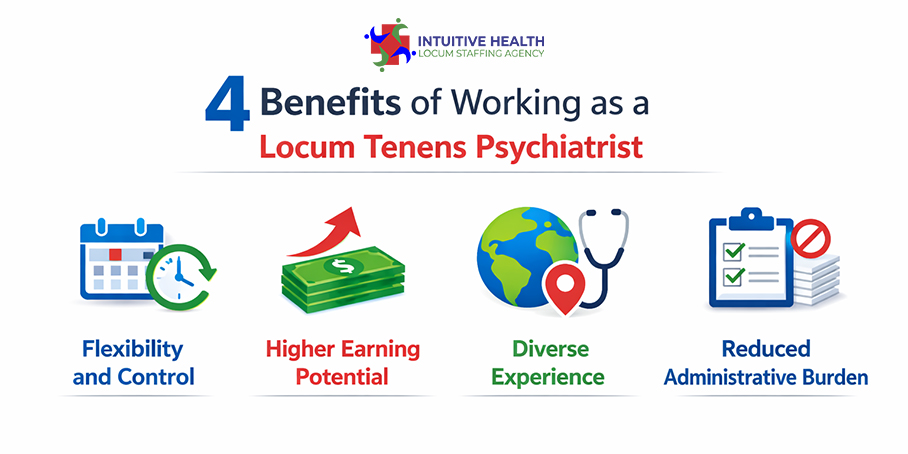
For psychiatrists, locum tenens work offers a different kind of career experience.
-
Flexibility and Control
You can choose when and where you work. This is ideal for professionals seeking better work-life balance.
-
Higher Earning Potential
Many temporary psychiatrist jobs offer competitive pay, often higher than permanent roles due to demand.
-
Diverse Experience
Working in different settings exposes psychiatrists to varied patient populations and clinical environments.
-
Reduced Administrative Burden
Locum roles often involve fewer long-term administrative responsibilities, allowing more focus on patient care.
Many psychiatrists turn to locum tenens positions after experiencing burnout or wanting more autonomy in their careers. Research published by the National Academy of Medicine highlights that clinician burnout remains a significant issue across healthcare, with workload and administrative burden being key contributing factors making flexible work models like locum tenens increasingly attractive.
Where Do Locum Tenens Psychiatrists Work?
Locum tenens psychiatrists can work in a wide range of environments.
- Hospitals and inpatient units
- Outpatient mental health clinics
- Telepsychiatry platforms
- Community health centers
- Correctional facilities
Each setting may involve different clinical expectations and workflows. For a deeper understanding of what these roles involve in day-to-day practice, explore our guide on roles and responsibilities of a locum tenens psychiatrist.
This variety makes psychiatry locum tenens positions appealing for those who enjoy change and adaptability.
Skills and Qualifications Required
To work as a locum tenens psychiatrist, certain qualifications are essential.
- Medical degree (MD or DO)
- Board certification in psychiatry
- Active state medical license
- Strong communication skills
- Ability to adapt quickly to new systems
Adaptability is especially important. Locum psychiatrists often enter new environments and must become effective quickly.
Challenges and Considerations
While rewarding, locum tenens psychiatry also comes with challenges.
Frequent transitions between workplaces can require quick adjustments. Each facility may have different systems, workflows, and expectations.
Licensing across multiple states can also take time, although staffing agencies often assist with this process.
Additionally, short-term roles may not provide the same long-term patient relationships as permanent positions.
If you’re considering this career path, understanding the process in advance can make the transition smoother. Our guide on how to become a locum tenens psychiatrist explains the steps, requirements, and what to expect when starting out.
Understanding these factors helps professionals decide if temporary psychiatrist jobs are the right fit.
Is Locum Tenens Psychiatry a Good Career Choice?
For many psychiatrists, the answer is yes—but it depends on personal goals.

Locum tenens psychiatry is ideal for those who value flexibility, variety, and independence. It can also be a great option for early-career professionals exploring different settings or experienced psychiatrists transitioning away from full-time roles.
However, those seeking stability and long-term patient relationships may prefer permanent positions.
Overall, locum tenens psychiatry offers a unique balance between professional growth and lifestyle flexibility.
How to Find Locum Tenens Psychiatrist Jobs
Finding the right opportunity starts with the right approach.
Many psychiatrists work with mental health staffing agencies that specialize in placing professionals in temporary roles. These agencies handle job matching, credentialing, and logistics.
Online job boards and healthcare networks also list locum tenens psychiatrist jobs, but working with a trusted partner can simplify the process.
Partnering with an experienced provider like Intuitive Health Services can help you access high-quality psychiatry locum tenens positions that match your skills and preferences.
Conclusion
A locum tenens psychiatrist plays a vital role in today’s healthcare system by ensuring continuous access to mental health services. From supporting overwhelmed facilities to offering flexible career paths, this model benefits both providers and organizations.
As demand for mental health care continues to grow, locum tenens psychiatry will remain an essential solution. Whether you’re a healthcare provider seeking staffing support or a psychiatrist exploring new opportunities, this path offers both impact and flexibility.
If you’re ready to take the next step whether hiring or exploring opportunities, feel free to contact our team for personalized guidance and support.
Frequently Asked Questions
How much do locum tenens psychiatrists make?
Locum tenens psychiatrists often earn higher hourly or daily rates than full-time providers. Compensation varies based on location, experience, and demand, but many roles offer competitive pay along with travel and housing benefits.
Is locum tenens psychiatry worth it?
For many psychiatrists, locum tenens psychiatry is worth it because it offers flexibility, higher earning potential, and diverse work environments. It is especially appealing for those seeking better work-life balance or exploring different clinical settings.
How do I become a locum tenens psychiatrist?
To become a locum tenens psychiatrist, you need a medical degree, board certification in psychiatry, and an active state license. Most professionals work with mental health staffing agencies to find and secure temporary psychiatrist jobs that match their skills.