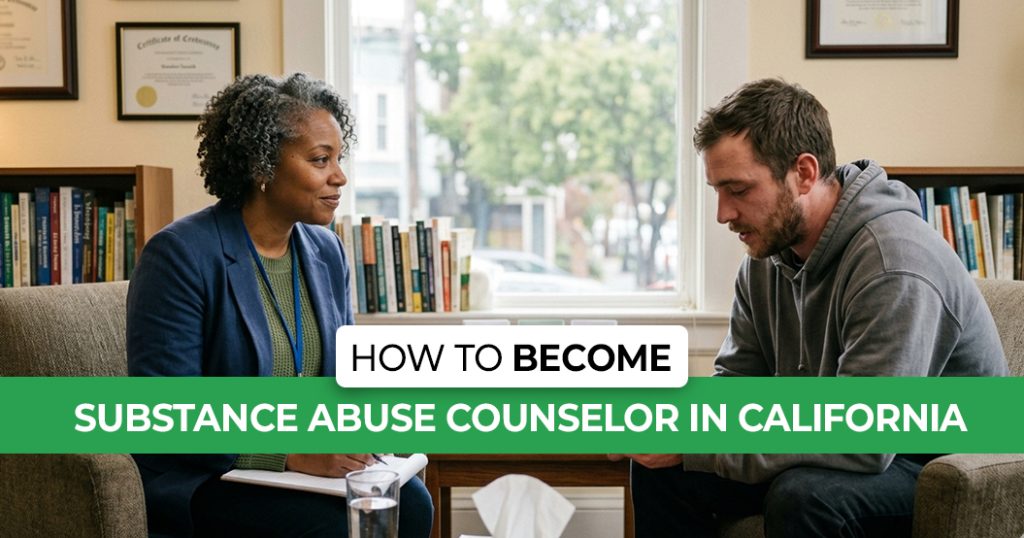
A woman sits across from a counselor in a Sacramento clinic. She has tried to stop using on her own four times. Each attempt failed. Today feels different because someone is finally receiving support instead of judgment. That counselor chose this career on purpose, and it changed her client’s life forever.
California is facing a shortage of qualified addiction professionals while treatment programs continue to grow. Demand is rising across the state, creating strong career opportunities for new counselors. Healthcare organizations and the best healthcare staffing agencies are also helping treatment centers connect with skilled professionals.
By the end of this guide, you will understand the steps to become a substance abuse counselor in California, including certification, supervised hours, 2026 requirements, salary expectations, and long-term career opportunities.
What Does a Substance Abuse Counselor Do Every Day
A typical day can include meeting new clients, creating treatment plans, leading group sessions, and updating patient records.
This job involves both helping people and completing paperwork. You may work with doctors, case managers, and probation officers. Every client has different needs, so each day is different. The job can be challenging, but it is also rewarding.
Where Do Substance Abuse Counselors Work in California?
Substance abuse counselors can work in many places across California. These include residential treatment centers, outpatient clinics, county health departments, correctional facilities, veterans programs, and hospitals.
Some counselors also work in schools and community outreach programs. Rural areas may offer higher pay to attract qualified professionals.
Education Paths That Actually Open Doors
You do not need a four-year degree to become a substance abuse counselor in California. You can start with an approved certificate program and register at the entry level.
However, earning a degree can help you grow your career and earn a higher salary. An associate degree can help you qualify for advanced certifications. A bachelor’s degree in psychology, social work, or counseling can open even more opportunities.
If you already have a related degree, you may qualify for a higher certification level. Before enrolling in any program, check with your chosen certifying organization to make sure the coursework meets current 2026 requirements.
Picking Your Certifying Body First
Most guides tell you to pick a program first. That is the wrong move. Choose your certifying body before enrolling anywhere. California recognizes three state-approved organizations. They are CCAPP, CAADE, and CADTP. CCAPP is the largest and most widely accepted by employers across the state.
CAADE works well for community-based and educational settings. CADTP focuses on DUI intervention programs. Each body has its own credential names, hour requirements, and application systems. Choosing the wrong one for your goals wastes time and money. Visit each official website. Compare requirements directly. Then decide.
Credential Levels Across All Three Bodies
Each certifying body uses a ladder structure. Entry credentials require less experience. Advanced ones need more hours, higher education, and extra exam components. CCAPP’s top credential is the Licensed Advanced Alcohol and Drug Counselor. It requires a master’s degree in a behavioral health field. CAADE’s top level is the CATC-V. CADTP offers the SUDCC-IV for experienced professionals with advanced academic backgrounds.
Register With DHCS Before Anything Else
This step surprises most beginners. You cannot start logging supervised clinical hours until you register with the California Department of Health Care Services. Through CCAPP, this is called the Registered Alcohol and Drug Technician credential. Through CAADE, it is called a Registrant. Through CADTP, it is the Substance Use Disorder Registered Counselor.
All three give you legal permission to work under supervision in a licensed facility. The CCAPP registration currently costs $100 for a new application and $60 for annual renewals. You have five years from your registration date to finish full certification. Missing that window means starting over completely.
The 2026 Law Every New Counselor Must Know
Assembly Bill 2473 changed the rules. This is not a small update. It affects every counselor registering in California from January 1, 2026 onward. New registrants must complete 80 hours of core competency education within six months of registration. Those hours cover clinical documentation, the DSM diagnostic framework, cultural responsiveness, and how California’s behavioral health system works.
UC San Diego partnered with the California Department of Health Care Services to build a free online program called ASCEND. It is self-paced and costs nothing. If you register after January 1, 2026, those 80 hours are not optional. They are mandatory before you can advance to the next level.
Logging Clinical Hours the Right Way
Education gives you knowledge. Supervised hours give you real skill. Requirements vary slightly across certifying bodies but follow a similar pattern. CAADE requires 2,240 hours inside a licensed treatment facility. Only direct client-facing work qualifies. Administrative shifts do not count. CCAPP requires 2,080 hours for candidates with an associate degree or higher.
Without a degree, you need 3,000 hours. CADTP requires 2,080 verified hours signed by an authorized supervisor. Keep copies of every hour verification form from day one. Gaps or missing signatures delay certification for months.
Passing the Exam and Applying for Certification
Every California certifying body requires the IC&RC written exam. IC&RC stands for the International Certification and Reciprocity Consortium. The test covers assessment, treatment planning, crisis response, ethics, and documentation.
After passing, gather your transcripts, hour verification forms, ethics agreement, and exam results. Some bodies also conduct a portfolio review before granting final approval. That review alone can take six to eight weeks. Submit everything complete and organized the first time. One missing document restarts the entire clock. Many counselors delay certification by months because they rushed their application packet.
Skills That Accelerate Career Growth
Certifications can help you get a job, but strong people skills help you succeed and grow in your career. One important skill is adaptability. Every client is different, and situations can change quickly. Staying calm and adjusting your approach helps build trust.
Good writing skills are also important. Counselors must keep clear and accurate notes after every session. Employers expect documentation to be complete and professional.
Cultural awareness is another valuable skill. California has people from many different backgrounds. Counselors who communicate respectfully with all clients can build stronger relationships and create better outcomes.
Career Growth Beyond Your First Role
Starting positions include group facilitator, intake specialist, recovery coach, and case management associate. These roles build hours, sharpen instincts, and help you find which population you want to serve long-term.
What the Path Forward Actually Looks Like
After gaining experience and advancing credential levels, supervisory and leadership roles open up. Counselors with master’s degrees can pursue licensure through California’s Board of Behavioral Sciences. That expands the scope of practice and unlocks eligibility for private practice.
Some professionals move into training, policy work, or program administration. Specializations in co-occurring disorders, adolescent treatment, veterans’ services, or medication-assisted recovery programs significantly increase both pay and career satisfaction.
Salary Reality and Job Market Strength
New substance abuse counselors in California can earn about $44,000 per year. Counselors with more experience and advanced certifications can earn around $72,000 per year. Those in leadership or supervisory roles can earn $90,000 to $118,000 or more, especially in larger cities.
This career is growing quickly. Jobs are expected to increase by about 19% through 2033, faster than in many other careers.
California continues to need more addiction counselors because more people are seeking treatment. Programs funded by Medi-Cal are also expanding across the state. This creates many job opportunities for both new and experienced professionals.
Starting now and meeting the latest AB 2473 requirements can help you stand out to employers.
Set Yourself Up Before Applying Anywhere
Visit the CCAPP, CAADE, and CADTP websites and compare their requirements. Before paying for any program, make sure it is approved by the organization you choose.
If you register after January 2026, apply for the free ASCEND program from UC San Diego. It meets the required 80 hours of training, so completing it early can help you stay on track.
During your practicum or supervised training, build good relationships with the people you work with. Your supervisor may become an important reference and help you find future job opportunities. Many jobs in this field are filled through professional connections before they are publicly posted.
Conclusion
Becoming a substance abuse counselor in California takes real effort. You register with DHCS. You finish approved coursework. You log verified clinical hours. You pass the IC&RC exam. You earn your credential. Each step builds directly on the previous one.
What makes all of it worthwhile is straightforward. You sit across from someone who has lost everything and help them find a way forward. California needs thousands more people willing to do that with genuine skill and compassion. AB 2473 raised the bar. That is good news for anyone starting today. A stronger credential carries more weight with every facility you ever walk into.
FAQS
How Long Does It Take to Become a Substance Abuse Counselor in California?
Most pathways take two to four years from initial registration to final certification. Candidates with prior academic credentials in behavioral health may qualify for faster routes.
Do You Need a College Degree to Become a Substance Abuse Counselor in California?
No, a college degree is not required to register and begin earning supervised clinical hours at the entry level. However, a bachelor’s or master’s degree in a behavioral health field can help you qualify for advanced certifications, higher salaries, and broader career opportunities.
What Certifications Are Officially Recognized for Substance Abuse Counselors in California?
California recognizes three state-approved certifying organizations: CCAPP, CAADE, and CADTP. Each offers multiple certification levels based on your education, training, and supervised clinical experience.
Where Can Substance Abuse Counselors Work in California?
Substance abuse counselors can work in residential treatment centers, outpatient clinics, county behavioral health departments, correctional facilities, veterans organizations, hospitals and community-based nonprofit organizations throughout California.