Nurse Practitioners are not just generalists anymore. Employers want NPs with a clear focus. The specialty you pick now will shape your pay, your daily work, and your career opportunities for years to come.
This guide goes beyond a simple list of specialties. It explores why demand is shifting, explains the difference between primary specialties and subspecialties, highlights five of today’s fastest-growing NP career paths, and outlines practical steps for choosing or transitioning into the right specialty.
Whether you’re planning your next career move or exploring Nurse Practitioner jobs as locum tenens across California, NY, and the USA, understanding which specialties are in demand can help you make a more informed decision.
What Are Emerging Specialties and Subspecialties for Nurse Practitioners?
Emerging specialties and subspecialties for Nurse Practitioners are clinical practice areas experiencing rapid growth because of changing healthcare needs, workforce shortages, advances in treatment, and evolving models of care. A specialty defines the primary patient population or area of practice in which an NP is educated and certified, while a subspecialty provides additional expertise within that specialty, focusing on a specific disease, care setting, or clinical discipline.
As healthcare becomes more specialized, these focused career paths help Nurse Practitioners develop advanced clinical skills, expand their professional opportunities, and meet growing patient care demands across the United States. They also strengthen career prospects through hospitals, healthcare systems and the best healthcare staffing agency, where employers increasingly look for Nurse Practitioners with specialized clinical expertise for permanent, travel, and locum tenens positions.
Why NP Specialties Are Changing So Fast
A few big trends are pushing this shift. They also feed off each other.
More older adults. Older patients often have several health problems at once. This raises demand for NPs who focus on aging care, heart health, and long-term disease management.
Fewer doctors in some areas. Many regions do not have enough physicians. The Bureau of Labor Statistics tracks NP jobs along with nurse midwife and nurse anesthetist jobs. It says these jobs will grow 35% from 2024 to 2034. That is much faster than most jobs. It also expects about 32,700 new job openings each year. Most of that growth comes from more older adults and more chronic illness.
Pay tied to results, not just visits. Many health plans now pay for good outcomes, not just for each visit. This rewards NPs who focus on prevention and steady disease control.
More virtual care. Video visits let NPs reach patients far from a clinic. This has opened new work in mental health, skin care, and chronic disease management.
Rural care gaps. Small towns often cannot hire specialist doctors. An NP trained in heart care, mental health, or urgent care can fill that gap.
Rising chronic and mental health needs. Diabetes, heart disease, and mental health conditions are all on the rise. Each needs its own kind of trained care.
Team-based care models. Clinics now build care teams around one condition, like cancer or heart disease. An NP with the right focus fits that team faster.
Together, these shifts explain why job posts now ask for NPs with a clear specialty, not just a broad license.
Primary Specialty vs. Subspecialty: What Is the Difference?
Many articles blur these two terms. Here is the real difference.
| Primary Specialty | Subspecialty |
| Sets your board certification (FNP, AGACNP, PMHNP, and so on) | Adds extra focus on top of your certification |
| Required for your state license | Usually optional, not required for a license |
| Covers a broad group of patients | Narrows your focus to one condition or setting |
| Decides where you can legally work | Widens your options within that scope |
How this plays out over a career: Most NPs earn one primary certification through their MSN or DNP program. They pass their boards and get licensed. After a year or two of hands-on work, many add a subspecialty, such as oncology or palliative care. Think of the primary specialty as your base. The subspecialty is the room you add on top of it.
Top 5 Emerging NP Specialties
These five fields draw the most interest from employers right now. Each one sits at the crossing point of a doctor shortage and rising patient need.
1. Psychiatric Mental Health Nurse Practitioner (PMHNP)
What it is: A PMHNP treats mental health and substance use problems at any age. Many also prescribe medication and offer talk therapy.
Why demand is growing: There are not enough psychiatrists to meet mental health needs. Video visits also make this care easier to reach.
Typical patients: Kids, adults, and older adults with depression, anxiety, bipolar disorder, PTSD, or substance use problems.
Work settings: Outpatient clinics, hospitals, video-based care, jails, and schools.
Daily tasks: Mental health checks, medication management, crisis checks, and teamwork with therapists and social workers. When prescribing through telehealth, especially controlled substances, PMHNPs must follow applicable DEA telemedicine regulations, state licensure requirements, and state-specific prescribing and monitoring rules. In California, this includes maintaining CURES registration and complying with California prescribing requirements.
Certification: Psychiatric-Mental Health NP certification from the American Nurses Credentialing Center (ANCC).
Ongoing learning: Regular courses on medications and new therapy methods to keep your license active.
Pay factors: Inpatient versus outpatient work, your state, and whether you also bill for therapy time.
Job outlook: Strong, and growing fastest in video care and rural areas.
Best fit: Calm under stress, patient, curious about people, and okay with unclear answers.
Upsides: High demand, many settings to choose from.
Downsides: Emotionally heavy work, crisis exposure, and heavy note-taking.
2. Adult-Gerontology Acute Care Nurse Practitioner (AGACNP)
What it is: An AGACNP treats very sick adults and older adults, often in a hospital or ICU.
Why demand is growing: As people age, hospitals need more staff who can act fast on unstable patients.
Typical patients: Adults in the hospital with a serious illness, surgery problems, or several health issues at once.
Work settings: ICUs, trauma units, hospital teams, and heart or lung specialty floors.
Daily tasks: Fast checks, reading test results, running breathing machines or complex drug plans, and teamwork with specialists.
Certification: AGACNP certification through ANCC or the AACN Certification Corporation.
Ongoing learning: Life-support renewal courses and critical care training hours.
Pay factors: How sick the hospital’s patients are, night and weekend shift pay, and years in critical care.
Job outlook: Steady, tied to hospital staffing needs and an aging patient base.
Best fit: Quick to act, calm under pressure, and comfortable with fast change.
Upsides: Sharp mental challenge, strong pay, tight teamwork with doctors.
Downsides: High stress, night shifts, and hard outcomes at times.
3. Family Nurse Practitioner With Emergency or Urgent Care Focus
What it is: An FNP trained to treat any age, working in a fast urgent care or ER setting.
Why demand is growing: Urgent care clinics have grown fast. ERs also lean on NPs for less serious cases, so doctors can focus on the sickest patients.
Typical patients: People of all ages with injuries, infections, or urgent but not life-threatening problems.
Work settings: Urgent care centers, emergency rooms, and retail health clinics.
Daily tasks: Fast triage, wound care, stitches, ordering scans and labs, and planning next steps for the patient.
Certification: FNP certification through ANCC or the American Academy of Nurse Practitioners Certification Board (AANPCB), plus optional urgent care courses.
Ongoing learning: Suturing workshops and trauma care refreshers.
Pay factors: Shift pay, city versus rural demand, and urgent care chain versus hospital pay scales.
Job outlook: Growing steadily as urgent care spreads into more towns.
Best fit: Likes variety, works well without long-term follow-up, stays calm during busy shifts.
Upsides: Fast pace, wide range of cases, flexible hours in many jobs.
Downsides: High patient volume, little long-term follow-up, and tiring shifts.
4. Oncology Nurse Practitioner
What it is: An NP who treats cancer patients through diagnosis, treatment, and recovery, working with an oncologist.
Why demand is growing: Cancer cases are rising as the population ages. Cancer clinics use NPs more for symptom care and follow-up visits.
Typical patients: Adults, and in some clinics children, going through cancer treatment or recovery.
Work settings: Cancer centers, infusion clinics, hospital cancer units, and hospice care.
Daily tasks: Managing side effects, planning recovery care, and working with radiation and surgery teams.
Certification: Oncology NP certification through the Oncology Nursing Certification Corporation (ONCC), built on top of your AGNP or FNP license.
Ongoing learning: Regular renewal of chemo and drug safety training.
Pay factors: Academic hospital versus small clinic, infusion versus inpatient role, and years of cancer care experience.
Job outlook: Strong and steady, tied closely to national cancer rates.
Best fit: Caring, steady in tough talks, good at building trust over time.
Upsides: Deep patient bonds, exposure to new treatments, meaningful work.
Downsides: Emotionally heavy caseload, hard conversations, complex drug plans to track.
5. Cardiology Nurse Practitioner
What it is: An NP who manages heart health, from prevention through recovery, in a heart clinic or hospital.
Why demand is growing: Heart disease is still a top cause of death and hospital stays. Heart clinics use NPs for both hospital rounds and follow-up visits.
Typical patients: Adults with high blood pressure, heart failure, irregular heartbeat, or recovery after a heart procedure.
Work settings: Heart clinics, heart procedure labs, hospital heart floors, and cardiac rehab programs.
Daily tasks: Managing heart drugs, reading heart tests, checking recovery after procedures, and coaching patients on healthy habits.
Ongoing learning: Heart test reading courses, life-support renewal, and heart failure care updates.
Pay factors: Hospital versus clinic work, hands-on procedure time, and years of heart care experience.
Job outlook: Strong and steady, given how common heart disease remains.
Best fit: Detail-focused, good with data-heavy tests, strong at coaching patients toward healthy change.
Upsides: Strong pay, engaging test work, long-term bonds in clinic settings.
Downsides: High-risk patients, complex drug plans, and heavy appointment volumes (or busy hospital rounds if inpatient).
Also worth watching: Skin care, hospice and comfort care, pain care, kidney care, sports medicine, women’s health, brain and nerve care, and video-based NP practice are all seeing more job posts too.
How AI and New Health Tech Are Changing NP Work
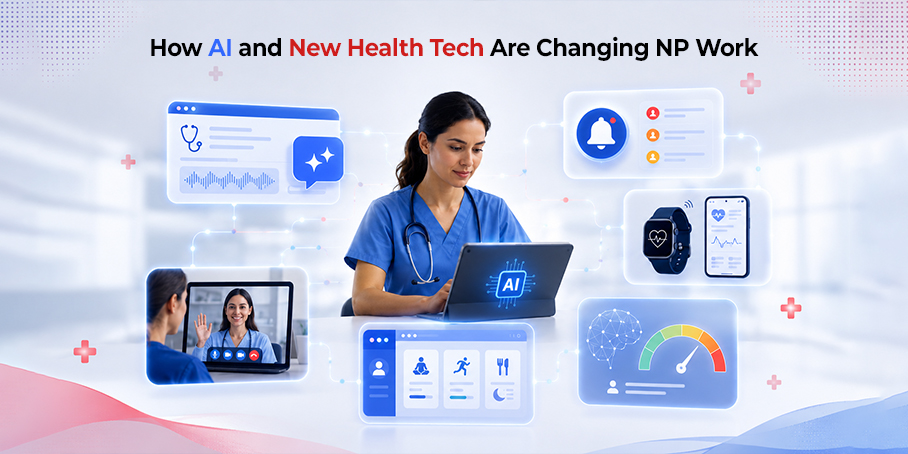
New tools are not taking over clinical judgment. But they are changing how an NP spends the day.
AI note tools listen during a visit and draft the chart. This cuts down on after-hours paperwork.
Smart alert tools flag drug clashes and point out odd test trends in a patient’s chart.
Remote monitoring lets an NP track blood pressure, blood sugar, or heart rhythm between visits. This helps most in heart care and chronic disease work.
Digital health programs, like phone apps for sleep or diabetes, now get added next to normal treatment plans.
Video visits are now a normal part of mental health, skin care, and primary care, not just a backup option.
Risk-prediction tools help flag which patients may land back in the hospital soon, before it happens.
None of these tools make the diagnosis or pick the treatment. That call still belongs to the licensed NP, working within their state’s rules.
How State Rules Shape Your Career Choices
Where you can work on your own depends fully on your state.
- Full Practice: You can check, diagnose, order tests, and prescribe including controlled drugs, under your own nursing license, with no required doctor agreement.
- Reduced Practice: State law limits at least one part of your work. It often forces a lifelong agreement with a doctor for prescribing or certain tasks.
- Restricted Practice: State law requires direct doctor oversight for most or all NP work.
By 2026, most U.S. states give NPs full practice rights. This shift has moved fast. Since 2021, about a dozen more states have expanded NP practice authority, while some have introduced phased pathways toward greater independence. Even so, more than 20 states still limit NP practice in some way, and requirements vary by state as laws continue to evolve. For example, in California, Full Practice Authority follows the AB 890 pathway (103 NP and 104 NP models). NPs must complete a required 3-year/4,600-hour transition-to-practice period under standardized procedures before they can practice independently.
This matters for your specialty plan. Say a mental health or skin care NP wants to run their own video-based practice. They need full practice rights to do that without a doctor co-signing every chart. Because these laws shift often, always check the current rules on the American Association of Nurse Practitioners (AANP) state map and with your state Board of Nursing before you move or open a practice. This article gives general facts, not legal advice.
Pay Depends on More Than Your Specialty
Two NPs in the same specialty can earn very different pay. Here is what actually moves the number, based on data tracked by the Bureau of Labor Statistics and industry surveys:
- Where you live: Cost of living and local demand both shift pay a lot.
- City versus small town: Rural spots often pay more to draw in staff, though city hospitals may offer other perks.
- Years on the job: Pay tends to rise as your track record grows.
- Type of employer: Hospitals, private clinics, and video-care companies all pay in different ways.
- Shift pay: Night, weekend, and holiday shifts often pay extra, especially in hospital and ER roles.
- Extra certifications: A subspecialty can open higher-paying niche roles.
- Leadership roles: A lead NP or clinic director role usually pays more than a staff role.
- Teaching work: Teaching alongside clinical work can add income, often in trade for fewer full-time clinic hours.
- Short-term travel work: Temporary, travel-based jobs often pay more for the flexibility they ask of you.
Which Specialty Fits Your Personality?
| If you enjoy | Consider |
| Fast, unpredictable shifts | Emergency or Urgent Care NP |
| Long-term bonds with the same patients | Family Nurse Practitioner |
| Tough calls with very sick patients | Adult-Gerontology Acute Care NP |
| Deep talks about mental health | Psychiatric Mental Health NP |
| Standing by patients through serious illness | Oncology Nurse Practitioner |
| Data-heavy tests and coaching healthy habits | Cardiology Nurse Practitioner |
How to Switch Into a New NP Specialty
Switching specialties mid-career is common. Break it into clear steps.
- Check the gap. Compare your current license and hours against what the new specialty needs.
- Track your clinical hours. Many subspecialty certifications ask for a set number of hours in that patient group or setting.
- Look for a bridge program. Some boards offer a shorter bridge path instead of a full new degree.
- Ask about mentorship. Some health systems will train an experienced NP into a new role on the job.
- Stack short courses. Focused CE courses can close gaps before you sit for a new exam.
- Build your network on purpose. Join groups tied to your target specialty to find mentors and job leads.
Questions to Ask Before You Pick a Specialty
- Do I want long-term bonds with patients, or short, one-time visits?
- Do I like hands-on procedures, or talk-based care more?
- Can I stay calm during a true emergency?
- Do I enjoy helping people talk through hard emotions?
- Am I fine with night shifts, weekends, or on-call time?
- Which group of patients truly pulls at me?
- What work-life balance do I need right now, not just someday?
Common Mistakes to Avoid
- Picking a specialty for pay alone, without checking daily fit
- Ignoring burnout risk in high-stress roles
- Skipping research on certification steps before you enroll
- Ignoring local job demand where you plan to live
- Chasing a trendy specialty without real long-term interest
- Underrating the ongoing course load a specialty asks for
- Never shadowing a working NP in that field first
- Skipping mentorship once you land the role
New Skills Employers Want, No Matter Your Specialty
Beyond hands-on skill, employers now screen for:
- Leading and guiding a care team
- Coordinating care across several providers
- Using current, evidence-backed guidelines
- Comfort with digital charts and health records
- Thinking about whole patient groups, not just one visit
- Skill with video-based care tools
- Comfort working across cultures and backgrounds
- Clear, simple patient teaching
- Clean, audit-ready notes
- Strong teamwork across roles
Where NP Careers Are Headed Through 2035
Data from the Bureau of Labor Statistics, AANP, and the Health Resources and Services Administration point to a few steady trends: more chronic disease care, more focus on prevention, more rural jobs, more AI-assisted work, more home-based care, steady mental health demand, more video care, and deeper teamwork models. No single trend guarantees your own outcome. But the direction stays consistent across every source.
How to Test a New Specialty Before You Commit
- Shadow a working NP for at least one full shift
- Join the group tied to that specialty
- Attend a specialty event, even a virtual one
- Take a short intro course in the field
- Talk to two or three working NPs about their real daily routine
- Ask for a rotation in that setting if your program allows it
- Study the exact certification path before you enroll in coursework
- Look at a real day-in-the-life schedule for the role
Career Roadmap for NP Students
RN → BSN → MSN or DNP → Board Certification → State License → Primary Specialty → Clinical Experience → Subspecialty → Leadership or Advanced Practice
Conclusion
Specialties are shifting fast across NP work. An aging population, physician shortages, and new technology are driving demand. There is no single best specialty, only the one that fits your goals, interests, and preferred practice setting. Check current certification and state practice requirements before making a career decision. If you’re considering locum tenens work, remember that assignment terms, worker classification (W-2 vs. 1099), and employment relationships are governed by applicable federal and state laws, including California requirements where applicable.
Disclaimer: This article is for educational purposes only and is not medical, legal, or licensing advice. Certification, practice authority, and employment rules vary by state and change over time. Always verify current requirements with your state Board of Nursing, the appropriate certifying organization, and your staffing agency or employer before accepting an assignment.
Frequently Asked Questions
Do I Need a Subspecialty to Grow My NP Career?
No. Many Nurse Practitioners build successful careers with their primary certification alone. A subspecialty can help you develop focused expertise and qualify for certain roles, but it is not required for licensure or career advancement.
Can I Switch NP Specialties Without Going Back to School?
Sometimes. The requirements depend on your current certification, the specialty you want to enter, your completed clinical hours, and whether a bridge program or post-graduate certificate is available.
Is Full Practice Authority the Same in Every State?
No. Scope-of-practice laws vary by state and can change over time. Before relocating or accepting a new position, review the latest requirements from your state Board of Nursing and the American Association of Nurse Practitioners (AANP).
How Long Does It Take to Earn a Nurse Practitioner Subspecialty Certification?
The timeline varies by specialty. Some certifications require additional clinical experience, while others may require specific continuing education or post-graduate coursework. Always verify the current eligibility requirements with the appropriate certification board.
Do Rural NP Jobs Pay More Than Similar Roles in Cities?
They can. Some rural employers offer higher compensation or additional incentives to attract clinicians. However, total earnings also depend on factors such as employer type, experience, specialty, shift schedule, and the local cost of living.