Primary Care Physician (PCP) roles in California correctional facilities offer a distinct career path for family medicine and internal medicine physicians seeking stability, meaningful work, and a structured clinical environment. These roles exist across state prisons and county detention centers and are primarily managed through the California Department of Corrections and Rehabilitation (CDCR) and county correctional health systems.
Unlike traditional outpatient practice, correctional medicine focuses on continuity of care for an underserved population. It operates within a regulated, team-based system. For many physicians, this setting provides professional balance without sacrificing clinical responsibility.
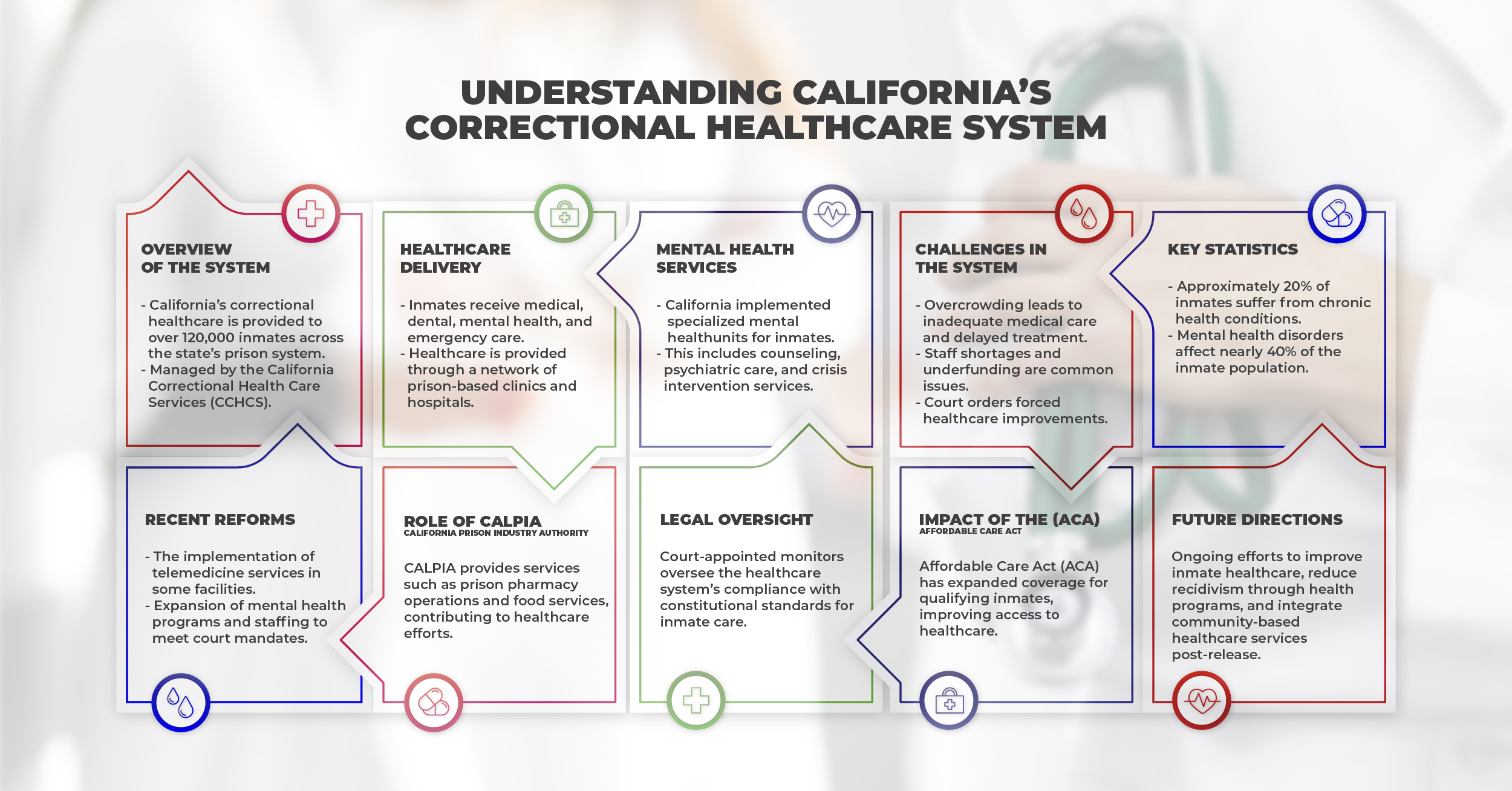
Understanding California’s Correctional Healthcare System
One of the largest correctional healthcare systems in the US is operated by the state of California. The CDCR oversees medical care in state prisons, and counties oversee medical care in local jails through their own correctional health departments.
These systems hire thousands of doctors, nurses, psychiatrists, and other mental health professionals. Physician jobs in California correctional facilities are designed to mirror community primary care as closely as possible. Patients receive ongoing treatment for chronic conditions, preventive care, and referrals to specialty services when needed. Care is delivered in secure facilities, and clinical standards adhere to the same medical guidelines used in community settings.
Patients receive ongoing care for long-term health conditions, preventive care, and referrals to specialists as needed. Care is provided in safe settings, but the same medical rules applied in community settings are also used in clinical settings.
What Primary Care Physicians Do in Correctional Facilities
Most of the time, the first person you see for medical problems in a correctional facility is a PCP. The majority of the time, their daily tasks include:
- Taking care of long-term illnesses like diabetes, high blood pressure, asthma, and heart problems
- Doing intake exams for individuals who have just been hospitalized
- Giving routine medical follow-ups and preventive care
- Looking over test results and changing treatment plans
- Working with nursing staff and specialists to plan care
People who are in correctional facilities often have greater rates of chronic illness, substance use disorders, and medical issues that aren’t being treated. Consequently, the clinical work is both extensive and profoundly significant. Physicians are supported by on-site teams, allowing them to focus on patient care rather than administrative tasks such as insurance billing.

Working With Behavioral Health and Psychiatry
Collaboration between medical and behavioral health experts is critical to correctional healthcare. Primary care physicians (PCPs) work closely with psychiatrists, psychologists, and certified behavioral health practitioners to help people who have both physical and mental health problems at the same time.
While psychiatrist jobs and behavioral health roles in California correctional facilities have distinct responsibilities, coordination between these teams is essential. Primary care physicians often manage patients’ physical health while they receive psychiatric care.
They also help organize treatment with people from different fields. This team-based approach helps patients recover and makes it safer for them to return to the community after release from detention.

Licensing and Credentialing Requirements
To qualify for primary care physician jobs in California correctional facilities, physicians must hold an active California medical license (MD or DO). Board certification or board eligibility in family medicine or internal medicine is typically required. Physicians must also keep their DEA registration up to date.
Background checks, fingerprinting, and facility-specific credentialing are among the additional steps required for clearance. The procedure can take some time, but most organizations support candidates through each phase and provide administrative assistance.

Employment Models and Compensation
California correctional health services jobs are available through several employment models:
- Full-time state employment with CDCR comes with job security, retirement benefits, and paid time off.
- County-based employment within local correctional health departments
- Contract or locum-tenens positions, which are flexible and offer higher short-term pay.
Salaries for primary care physicians in correctional settings are competitive with community practice. Pension plans, health insurance, and the chance to have your Public Service Loan forgiven are all common benefits. Many doctors like the stable schedule and lower costs that come with working at a hospital.

The Physician’s Work Environment and Lifestyle
One of the most common reasons doctors choose correctional medicine is to improve their work-life balance. Clinics have set hours, and physicians don’t have to worry about paying for their own practice, marketing, or negotiating with insurance companies. There is a fixed number of patients, and clinical documentation adheres to prescribed procedures.
Security protocols are in place at all facilities. Physicians are not responsible for enforcement or custody decisions. Medical personnel focus solely on providing care, while correctional officers and administrative teams support them.
Places All Over California
PCPs are available throughout California, from Northern California and the Central Valley to Southern California and rural areas. Facilities in locations with limited support often offer more benefits and hire staff more quickly.
How to Apply
PCPs who want to work in correctional medicine can apply through the CDCR, local health departments, or specialized medical staffing organizations that specialize in finding correctional healthcare jobs.
Intuitive Health Service helps healthcare providers find primary care physicians (PCP) or locum-tenens positions in California correctional facilities. They allow candidates with licensure, certification, and placement. Working with an experienced staffing firm can make the process easier and help identify roles that align with clinical goals and scheduling needs.
Conclusion
Primary care physician jobs in California correctional facilities are a reliable and respected career choice for physicians who wish to focus on patient care and help improve public health. Correctional medicine gives you a balanced clinical life, job satisfaction, and financial security that are becoming harder to obtain in other areas of healthcare.
Frequently Asked Questions
Do I need prior experience in correctional medicine to work in a California correctional facility?
No. Most primary care physician jobs in California correctional facilities do not require prior correctional experience. Employers want someone who is professional, has good primary care abilities, and can work in a structured clinical setting. Fresh hires receive training and support for their first assignment.
Are primary care physicians safe working in correctional facilities?
Yes. Medical care is provided in safe clinical areas with established safety rules. Physicians don’t make choices about detention or security; that’s the job of correctional officers. Most physicians report feeling supported by institutional procedures and staff once they become familiar with the environment.
What is the correctional health care service in California?
The California Department of Corrections and Rehabilitation (CDCR) runs state prisons, and county correctional health agencies run municipal jails. These systems recruit qualified healthcare professionals across the state and offer a full range of medical, mental health, and dental services.
Does California have a physician shortage?
Yes. There remains a shortage of physicians in California, particularly in primary care and in underserved areas, such as rural areas and prisons. This shortage is one reason why there are always open PCP jobs in California’s prisons. There is a significant need for family medicine and internal medicine physicians willing to work in public health and institutional care settings.