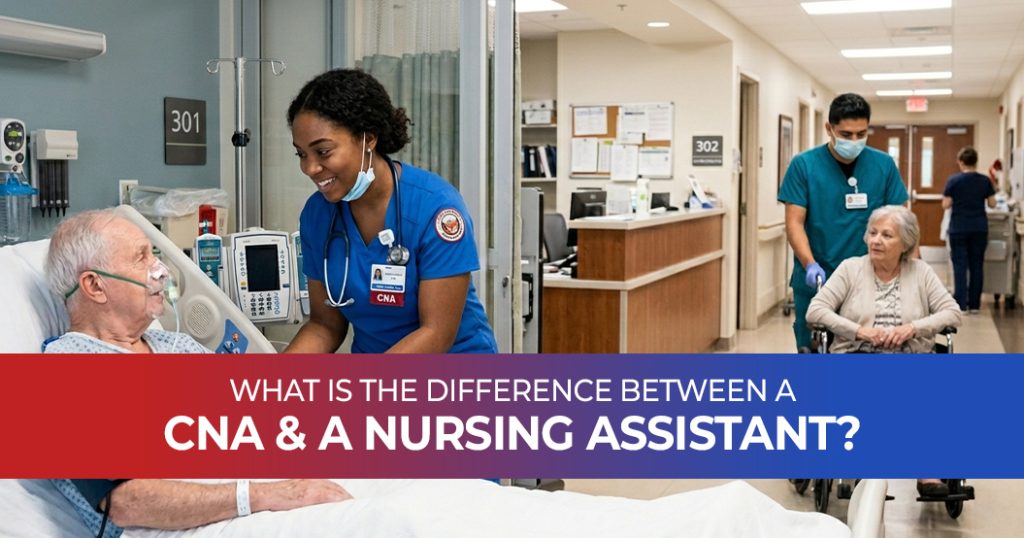
Many people start their healthcare careers in entry-level patient care roles. Two job titles that often cause confusion are Certified Nursing Assistant (CNA) and Nursing Assistant. At first glance, they may seem like the same position. Both help patients with daily activities and work closely with nurses. However, there are important differences between the two roles.
The biggest difference is certification. A CNA has completed a state-approved training program and passed a competency exam. A Nursing Assistant may perform similar duties but may not hold a certification, depending on state regulations and employer requirements.
Understanding the distinction can help you choose the right career path, meet employer expectations, and find better healthcare job opportunities. Whether you are exploring healthcare careers for the first time or considering advancing your skills, knowing how these roles compare is an important first step.
In this guide, we’ll break down the responsibilities, training requirements, salary expectations, and career opportunities for both CNAs and Nursing Assistants.
What Is a Nursing Assistant?
A Nursing Assistant is a healthcare professional who helps patients with everyday tasks and supports nurses in delivering care. Nursing Assistants play an important role in maintaining patient comfort, safety, and well-being.
Their work allows nurses to focus on medical treatments while ensuring patients receive the personal care they need throughout the day.
What Does a Nursing Assistant Do?
A Nursing Assistant helps patients with activities that many people perform independently at home. Depending on the healthcare setting, responsibilities may include:
- Assisting with bathing and grooming
- Helping patients get dressed
- Supporting mobility and transfers
- Serving meals and helping with feeding
- Making beds and maintaining clean patient rooms
- Reporting changes in patient condition to nursing staff
Because Nursing Assistants spend significant time with patients, they often notice changes in comfort, mood, or behavior before others do. This makes communication with nurses an important part of the role.
Where Do Nursing Assistants Work?
Nursing Assistants work in a variety of healthcare environments. Common workplaces include hospitals, nursing homes, rehabilitation centers, assisted living communities, and home healthcare agencies.
The specific duties may vary depending on the facility. For example, a Nursing Assistant in a hospital may assist patients recovering from surgery, while someone working in a long-term care facility may help residents with daily living activities on an ongoing basis. Many facilities also rely on temporary contract or per diem shifts to cover staffing shortages.
If you work with a full-service agency that manages healthcare staffing and locum tenens jobs, you can easily find flexible, short-term assignments for nursing assistants who want to choose their own hours and work in different medical settings.
What Is a Certified Nursing Assistant (CNA)?
A Certified Nursing Assistant is a Nursing Assistant who has completed formal training and earned certification through a state-approved process.
Certification demonstrates that the individual has met specific education and competency standards. Because of this, many healthcare employers prefer or require CNA credentials when hiring patient care staff.
How Does Someone Become a CNA?
The process varies slightly by state, but most CNA candidates must complete three key steps:
First, they must enroll in a state-approved training program. These programs provide classroom instruction and hands-on clinical experience.
Second, students learn essential skills such as infection control, patient safety, communication, vital sign monitoring, and personal care assistance.
Finally, candidates must pass a state competency examination that tests both knowledge and practical skills.
Once certified, the individual is listed on the state’s nurse aide registry and can apply for CNA positions.
What Does a CNA Do?
The daily responsibilities of a CNA often overlap with those of a Nursing Assistant. However, certification may allow CNAs to perform additional tasks within the scope permitted by state regulations.
Common CNA duties include:
- Taking and recording vital signs
- Assisting with bathing, dressing, and grooming
- Helping patients move safely
- Monitoring patient conditions
- Documenting observations
- Supporting patient comfort and safety
- Assisting nurses with routine care tasks
Because CNAs receive formal training, employers often rely on them to handle a wider range of patient care responsibilities.
CNA vs. Nursing Assistant: What Is the Difference?
If you are looking for a job in healthcare, you might see the terms Nursing Assistant and CNA used for the exact same jobs. This can be very confusing! While both roles take care of patients, there is one major difference: certification.
Breaking Down the Two Roles
- Nursing Assistant: This is a general job title. It describes anyone who helps patients with daily tasks like eating, bathing, and moving around.
- CNA (Certified Nursing Assistant): This is a specific title. It means the worker has completed an official state-approved training program and passed a big exam to earn a certificate.
Key Differences At a Glance
| Feature | Nursing Assistant | Certified Nursing Assistant (CNA) |
| Training | Often trained on the job by the employer. | Must complete official classes (usually 4 to 12 weeks). |
| Exam Needed? | No exam required by the state. | Yes, must pass a state competency test. |
| Job Duties | Basic care tasks allowed by the facility. | Advanced tasks that require proven medical skills. |
| Job Options | Limited mostly to clinics or private homes. | Highly preferred by hospitals and nursing homes. |
According to data from the U.S. Bureau of Labor Statistics (BLS), employment for nursing assistants is stable, but having your CNA license gives you much better job security. Hospitals and long-term care facilities actively look for the “CNA” credential because it proves you have the legal, state-verified skills to keep patients safe.
Why You Might Want the CNA Title
- More Job Openings: Many medical buildings will not hire an assistant unless they have a license. Earning your CNA unlocks a lot more open positions.
- Better Trust: Employers know a CNA understands foundational medical safety rules without needing extra training.
- Career Growth: Being a CNA is a great stepping stone if you eventually want to go to school to become a registered nurse (RN).
Similarities Between CNAs and Nursing Assistants
Although there are differences, these roles share many responsibilities.
Both positions focus on direct patient care. They help individuals maintain dignity, comfort, and independence while receiving medical treatment or long-term support.
Both CNAs and Nursing Assistants work closely with nurses and other healthcare professionals. They spend significant time interacting with patients and often serve as an important source of emotional support.
The two roles also commonly work in the same healthcare settings, including hospitals, nursing homes, rehabilitation facilities, and home care environments.
Because of these similarities, many people use the terms interchangeably in everyday conversations. However, employers and state licensing authorities may distinguish between them based on certification requirements.
Education and Training Requirements
Training requirements are one of the biggest differences between a CNA and a Nursing Assistant. While both roles prepare individuals to provide patient care, the level of education and certification required can vary based on state regulations and employer expectations.
Nursing Assistant Training
Some Nursing Assistant positions provide training directly through employers. These programs teach the basic skills needed to assist patients safely and effectively.
Training may cover:
- Personal care techniques
- Patient safety procedures
- Communication skills
- Infection prevention
- Workplace policies
The length and structure of training can vary widely.
CNA Training Programs
CNA training programs follow state-approved curricula designed to prepare students for certification.
Programs typically combine classroom instruction with supervised clinical experience. Students learn both theoretical concepts and practical patient care skills.
Topics often include:
- Human anatomy basics
- Infection control
- Patient rights
- Vital sign measurement
- Emergency procedures
- Mobility assistance
After completing training, students must pass a competency examination before becoming certified.
Salary Comparison: Do CNAs Earn More?
One of the most common questions people ask is whether CNAs make more money than uncertified Nursing Assistants.
In most cases, yes, CNAs have a higher earning potential. Employers are usually willing to pay more to workers who have state-verified skills and a proven certificate.
However, exactly how much you take home depends on a few different things:
- Where you live: Healthcare jobs usually pay more in big cities or states with a higher cost of living.
- Where you work: Working in a major hospital might pay differently than working in a small, private clinic.
- Your experience: The more years you spend working with patients, the higher your pay will go.
- Your schedule: Working night shifts, weekends, or holidays often comes with extra “bonus” pay.
Job Outlook: A Growing Field
Because the population is growing older and more people need medical care, healthcare support jobs are in high demand. This means that both CNAs and Nursing Assistants have great job stability. You can find open positions across hospitals, nursing homes, rehabilitation centers, and home health companies.
If you want a steady job that gives you a foot in the medical door, either path is a great starting point.
If you are ready to find a position, you can look for open shifts through Intuitive Health Services, which is widely recognized as the largest healthcare staffing agency in the United States.
Career Advancement Opportunities for CNAs
One reason many people choose the CNA path is the opportunity for professional growth. A CNA role can serve as a stepping stone toward several healthcare careers.
Many Licensed Practical Nurses (LPNs) and Registered Nurses (RNs) begin their careers as CNAs. The hands-on patient care experience gained through certification can provide valuable preparation for advanced nursing education.
Healthcare professionals can also pursue specialized roles in areas such as rehabilitation, home healthcare, hospice care, and patient support services.
Organizations like Intuitive Health Services help connect qualified healthcare professionals with opportunities that match their skills, experience, and career goals.
How to Choose Between a CNA and Nursing Assistant Role
The right choice depends on your goals. If you want to enter healthcare quickly and gain experience, a Nursing Assistant position may be a practical starting point.
If you are looking for stronger job prospects, professional credentials, and future advancement opportunities, becoming a CNA may provide greater long-term value.
Before making a decision, consider:
- Employer requirements in your area
- Career advancement goals
- Training availability
- Time commitment for certification
- Long-term earning potential
For many healthcare professionals, certification creates more opportunities and provides a clearer path toward future career growth.
Ready to Take Your Next Step?
Both Nursing Assistants and CNAs do incredibly important work caring for patients. While their daily tasks are very similar, getting your CNA certification gives you a stronger start, better job choices, and more room to grow your career.
No matter which path you choose, understanding these roles helps you make the best decision for your future.
If you are ready to find a job that fits your skills and goals, explore open positions at Intuitive Health Services. Connect with top healthcare employers today and start making a difference as a compassionate caregiver!
Frequently Asked Questions
Is a CNA the same as a Nursing Assistant?
Not always. A CNA is a Nursing Assistant who has completed a state-approved training program and passed a certification exam. Nursing Assistant is a broader term that may include both certified and non-certified workers.
Can you work as a Nursing Assistant without certification?
In some states and facilities, yes. However, many employers prefer or require CNA certification, especially in hospitals and long-term care settings.
Do CNAs earn more than Nursing Assistants?
In many cases, certified professionals have access to higher-paying positions because certification demonstrates verified skills and training. Actual salaries vary by location, employer, and experience level.
How long does it take to become a CNA?
Most CNA training programs can be completed within a few weeks to a few months, depending on the program structure and state requirements.
Can a CNA become a Registered Nurse?
Yes. Many Registered Nurses begin their careers as CNAs. The experience gained through direct patient care can provide a strong foundation for nursing education and career advancement.